Hello,Welcome to Normal Website!

Service hotline400-6177-880
<b id="k9gkf"><menuitem id="k9gkf"></menuitem></b>
<b id="k9gkf"><menuitem id="k9gkf"></menuitem></b>
Hello,Welcome to Normal Website!
Service hotline400-6177-880

Contact US
Tell:+86-571-85691658
Fax:+86-571-28867000
E-mail:[email protected]
Address:North block, 9 block,, Jiangling, Binjiang District, Hangzhou, Zhejiang

Restricted Chemical Substances

Bisphenol BPA A
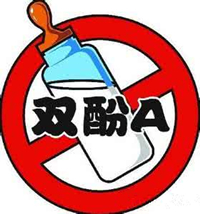
What is BPA/Bisphenol A
Bisphenol A, scientific name 2,2-bis (4-hydroxyphenyl) propane, also known as diphenylpropane, abbreviated as bisphenol A (BPA), is an English name for bisphenol A. White crystal, flammable, with a slight phenol odor. Boiling point 250-252 ℃ (1.773kPa). The melting point of pure products is 155-156 ℃, and the melting point of industrial products is 150-152 ℃. Relative density 1.195 (25 ℃), flash point 79.4 ℃. Soluble in ethanol, acetone, ether, benzene, and dilute alkali solution, slightly soluble in carbon tetrachloride, almost insoluble in water.
Bisphenol A is synthesized from phenol and acetone in acidic medium, and is commonly used as the main raw material in products such as epoxy resin, polycarbonate, polysulfone, polyarylester, phenolic resin, unsaturated polyester resin, flame retardant, etc.
Bisphenol A is basically divided into two grades: polycarbonate grade and epoxy grade, and its quality indicators are shown in Table 1.
Table 1 Quality Indicators of Bisphenol A Provided by SGS Testing Company
Indicator | Polycarbonate grade | Epoxy grade |
Appearance | Powdered, flaky, granular white crystals | |
Crystallization temperature ℃ | ≥156 | ≤154 |
Chromaticity (platinum cobalt) number 25 grams of sample dissolved in 35ml of methanol | ≤25 | ≤50 |
Iron content ppm | ≤1 | ≤2 |
Free phenol content% | ≤0.03 | ≤0.1 |
Moisture content% | ≤0.2 | ≤0.3 |
Ash content% | ≤0.01 | |
Isomer% | ≤0.2 | ≤0.5 |
The hazards of BPA/Bisphenol A
According to American experimental researchers, the chemical substance bisphenol A (BPA) commonly found in plastic bottles may cause cancer and other functional disorders. In addition, bisphenol A (BPA) can cause hormonal dysfunction in the human body, posing potential hazards to growth, development, and reproduction. Although this conclusion has not been affirmed by authoritative authorities, it has caused consumer panic among some informed consumers.
Restrictions on BPA/Bisphenol A by Various Countries
China: GB 13116-91 Hygienic standard for polycarbonate resin used in food containers and packaging materials.
GB 14942-94 Hygienic standard for polycarbonate molded products used in food containers and packaging materials.
GB/T 5009.99-2003 Analysis Method for Hygienic Standard of Polycarbonate Resin for Food Containers and Packaging Materials.
The hygiene standards in our country stipulate that the leaching amount of phenol (distilled water, refluxed for 6 hours) in carbonate resin and molded products shall not exceed 0.05 mg/kg,
It is a quantitative calculation of free phenols in a solution using titration method.
EU: EU Regulation 2002/72/EC stipulates a migration limit of 3 mg/kg for BPA/bisphenol A in plastic food contact materials.
The European Union uses liquid chromatography to detect the migration of bisphenol A (with a detection limit of 0.2-0.7 mg/kg).
United States: The Food and Drug Administration (FDA) of the United States stipulates that BPA/bisphenol A can be used as raw materials for food contact materials.
The EPA (1993) stipulates that the maximum acceptable dose or reference dose is 0.05mg/kg.bw.
Japan: The Food Hygiene Law stipulates that the dissolution limit of BPA/bisphenol A in polycarbonate food containers is 2.5 mg/kg.
BPA/Bisphenol A detection
NormalTCI relies on its strong chemical experimental capabilities and professional experimental engineers to provide BPA/bisphenol detection services. For more details, please contact us!
The European Union has officially banned the use of bisphenol A in food contact materials
On December 31, 2024, the Official Journal of the European Union officially issued the BPA ban (EU) 2024/3190, which requires further revision of the Plastics Regulation (EU) 10/2011 and the repeal of (EU) 2018/2013. It will officially come into effect on January 20, 2025. The issuance of this ban means the first comprehensive ban on the use of bisphenol A in FCM in the European Union and member states, with a wide range of implications and significant impact. The main content of the ban is as follows:
1. Prohibition requirements for bisphenol A
(1) Prohibit the use of bisphenol A and its salts in the manufacture of adhesives, rubber, ion exchange resins, plastics, printing inks, silicone, varnishes, and coatings for food contact materials, and prohibit the placement of food contact materials and products made with bisphenol A on the EU market.
(2) It is prohibited to use any bisphenol or bisphenol derivatives other than BPA for the manufacture and sale of FCM, unless authorized, and no residual BPA is allowed.
(3) BPA ban exemption
Material type | Particular application | Other restrictions |
Clearcoat and coating | Used as a monomer or starting material for producing liquid epoxy resin, suitable for self-supporting food contact materials or items with a capacity greater than 1000 liters. | Can be transferred to food. Items that come into contact with food should be cleaned and rinsed before their first contact with food. |
Plastics | Used as a monomer or starting material for manufacturing polysulfone filtration membrane components. | Cannot be transferred to food. Items that come into contact with food should be cleaned and rinsed before their first contact with food. |
2. Revision (EU) No 10/2011
(1) Add the following content to Article 6 "Exemption for substances not included in the EU list":
As a partial exemption to Article 5, "Bisphenol A" or "BPA" (CAS: 80-05-7) and other harmful bisphenol or harmful bisphenol derivatives defined in the proposal can only be used to manufacture plastic materials and products that comply with the proposed regulations (i.e. Appendix II exemption requirements).
(2) Delete the entries for substance 151 BPA and substance 154 BPS (CAS: 80-09-1) in Table 1 of Appendix I of (EU) 10/2011.
3. Provisions for the transition period
(1) Disposable food contact materials and products
Disposable FCM products can continue to be sold until July 20, 2026. If it is the following special products, they can continue to be sold until January 20, 2028.
a. Used for storing vegetables or fruits, excluding products defined in Annex I of Council Directive 2001/112/EC (13);
b. Or aquatic products as defined in Regulation (EC) No 853/2004 of the European Parliament and of the Council (14);
c. Only apply varnish or coating made of bisphenol A on the outer surface of the metal.
(2) Repetitive food contact materials and products
Repetitive FCM products can be launched on the market for the first time until July 20, 2026.
But if the reusable food contact items used in professional food production equipment comply with the rules applicable before the effective date of this regulation but do not comply with the rules in this regulation, they can be put on the market for the first time until January 20, 2028.
In addition, reusable food contact materials and products that are first put on the market in the above two situations can be retained in the market until January 20, 2029 at the latest.
4. Declaration of conformity
(1) The identity, address, and contact information of the operator who issued the conformity declaration, including the current phone number or email address;
(2) The identity, address, and contact information of the operator who manufactures or imports food contact materials and products, including the current telephone number or email address;
(3) Name information of intermediate materials or final products;
(4) Declaration date;
(5) List of Bisphenol or Bisphenol Derivatives Used in the Manufacturing of Food Contact Materials and Products;
(6) Confirm that the intermediate materials and final products comply with the provisions of this Regulation and Articles 3, 15, and 17 of (EC) No 1935/2004.
Please consult NormalTCI for specific questions
National service hotline: 400-6177-880
Email:[email protected]
Copyright @ 2015 NORMAL (HANGZHOU) TESTING & CERTIFICATION CO., LTD.
Tell:+86-571-28906690 E-mail:[email protected] Service Hotline:400-6177-880 Fax:+86-571-28867000
If you have any comments on the website, please email to:[email protected]
<b id="k9gkf"><menuitem id="k9gkf"></menuitem></b>
<b id="k9gkf"><menuitem id="k9gkf"></menuitem></b>